
Contact, Simulation, and the Felt Experience of Space
Updated: Apr 28

We’ve long understood that the brain mirrors other people. We’re now beginning to see that it may also be mirroring the environment itself. There’s new evidence that the brain’s mirror neuron system responds not only to social interactions, but also to interactions and perceived relationships between inanimate objects in our environment.
For decades, the mirror neuron system (MNS) has been understood as a mechanism for social cognition and connection. Observing another person’s movements, their subtle facial and eye expressions, small shifts in body posture, and even hearing the intonation and pacing of their voice, recruits corresponding activity in the observer’s motor, somatosensory, and auditory systems. Watching someone reach out for something or perform a skilled action, or listening to them speak or sing, engages neural circuitry associated with executing or imagining those same behaviors ourselves. This framework has usually been applied to empathy, imitation, and interpersonal understanding.
But more recent work extends this principle beyond actions and beyond a purely social response and into the realm of our environments.
Beyond Social Mirroring
Emerging research suggests that this same system is responsive to the interactions and relationships between natural or inanimate objects themselves, whether naturally occurring or intentionally placed within a space. This has important implications for biophilic design, where natural elements such as plants, water, stone, light, and shadow are not only visually calming, but are continuously interacting with each other and their surroundings in ways the nervous system may be internally simulating on a subtle level.
Functional imaging studies show that observing touch activates the observer’s own somatosensory cortex, which is typically involved in processing direct tactile experiences. This activation does not depend on whether the observed contact is human, is intentional, or is biologically driven.
What’s striking is that the same visuotactile mirroring response occurs when a hand touches a chair, when a branch brushes against a surface, a leaf falls to the ground, or when two inanimate objects are in contact through non-intentional movement.
In effect, the nervous system simulates the contact itself, in what scientists call embodied simulation. This can influence emotional state, attention, and nervous system regulation by producing a felt sense of activation, which may support regulation or contribute to dysregulation depending on context and the individual’s existing state.
The brain maps these observed interactions in the environment onto the body, generating a low-level internal representation of the sense of touch even in the absence of physical contact, and even in the absence of other humans.
And what’s truly incredible is that this process is fully automatic and operates below conscious awareness.
A Layered Response to Contact- How the Environment Is Felt
Given the current limitations of research, there does appear to be a distinction in how this system responds. When touch is perceived as intentional or human-driven, the response tends to be stronger, suggesting a deeper resonance with socially relevant stimuli. In contrast, more generalized activation seems to support a broader encoding of contact that is not dependent on intention. Overall, this points to a layered system: one that registers contact more broadly, and another that scales intensity based on perceived meaning.
The implication is that the environment is not passively observed. It is continuously, implicitly felt. And as much as we can shape it, it acts to shape us.
Every point of contact within a space, whether dynamic or static, contributes to a stream of micro-sensory activity. We’re beginning to understand that movement, overlap, pressure, collision, and adjacency are not only visual phenomena. They’re processed through neural systems designed for tactile experience and somatic relevance.
Implications for Design
This raises an under-explored question within neuroarchitecture: If the nervous system is continuously simulating contact based on what it observes, how do the qualities of that contact influence internal states?
If we imagine that this system encodes variations in pressure, velocity, rhythm, and continuity, then we can assume that abrupt, high-impact interactions are processed differently than slow, continuous ones. This distinction is well established in direct tactile experience, and it could plausibly extend to observed contact through embodied simulation mechanisms.
Imagine that an observed collision could produce a brief internal activation response, even in the absence of physical involvement. And conversely, slow, rhythmic, or continuous contact could be more likely to register as non-threatening or stabilizing. Although this hasn’t been extensively studied in environmental contexts yet, the underlying neural architecture suggests that such distinctions are not neutral.
This adds another layer to how we think about design. Beyond the very influential aspects of form, material, and visual composition, there’s the question of how elements within a space interact. How surfaces meet, how objects rest against one another, how movement unfolds across materials or layers, and how forces are implied through structure may all contribute to the nervous system’s ongoing interpretation of safety.
Safety, in this context, is physiological. It’s shaped by patterns the nervous system recognizes as predictable, continuous, and non-threatening.
If observed contact is being internally simulated through somatosensory pathways, then environments may be capable of reinforcing or undermining that sense of comfort, soothing and ultimately safety, through the micro-dynamics of interaction they present.
Directions for Future Research
This opens several directions for future research.
For example:
How does exposure to different types of contact, particularly between natural (biophilic) elements versus fully inanimate materials, affect autonomic regulation in real time?
Can measurable changes in heart rate variability, skin conductance, or neural activity be linked to specific environmental interaction patterns across both natural and constructed elements?
Do environments characterized by soft, continuous, or coherent contact relationships support greater parasympathetic activation?
How do layered interactions, particularly in biophilic environments, such as light moving across textured surfaces or plant movement against architectural elements, compound these effects over time?
These questions suggest a shift in how regulation is approached in built environments. Rather than relying solely on explicit interventions, it may be possible to support nervous system regulation through the continuous, low-level sensory information embedded in space itself.
The nervous system doesn’t require direct physical contact to respond and register sensations that might feel like being held, moved, or pushed. This interpretation is most surely shaping an individual’s internal state continuously, beneath conscious awareness.
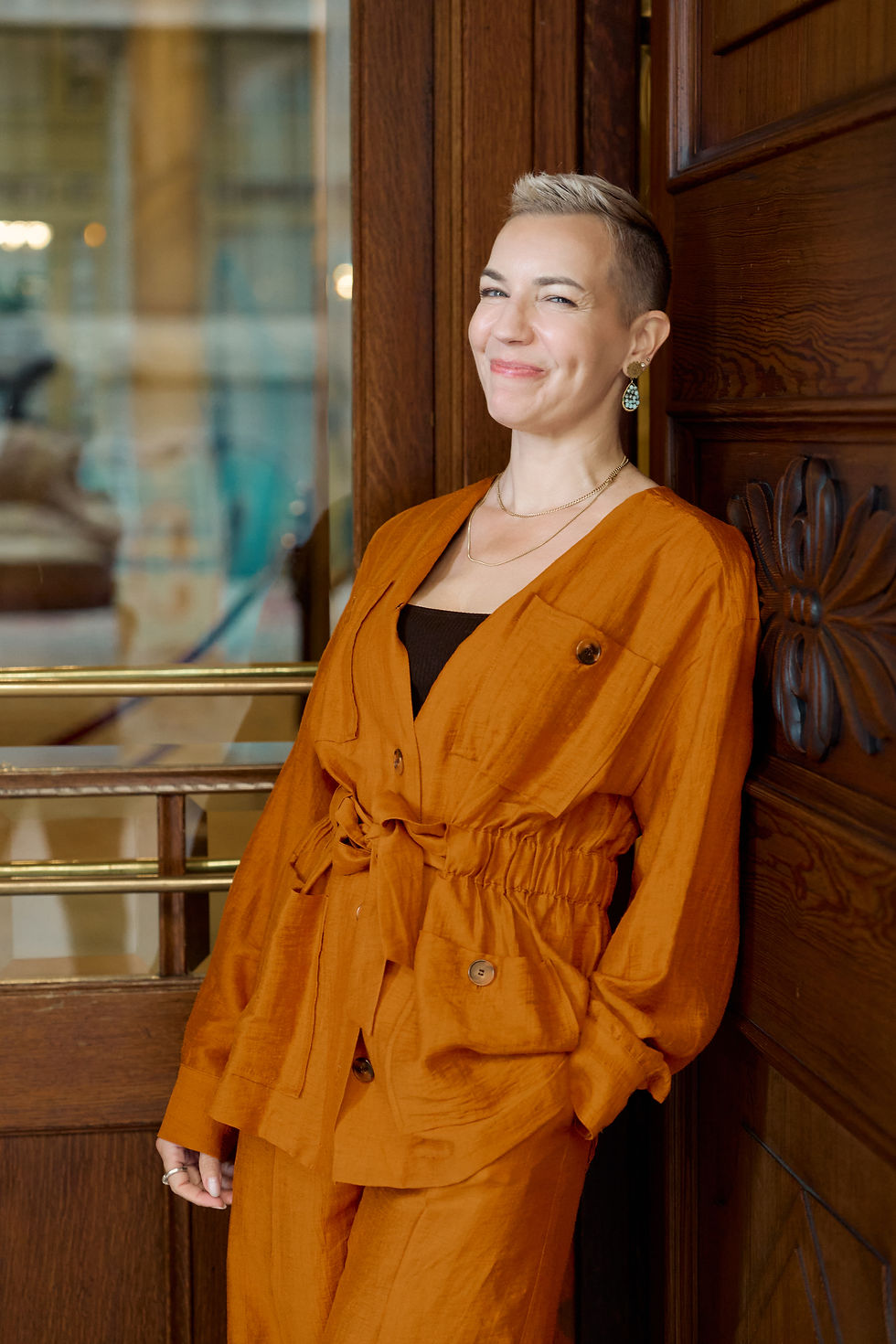
Jessica Crow is a Neurowellness Experience Architect working across hospitality, wellness, and technology. Her work focuses on how environment, human interaction, and experience design shape the nervous system in real time. She designs regulation-based experiences for spaces, teams, and systems that aim to move beyond momentary state change into lasting capacity. This piece was prepared for Fuego ‘Soul x Science’ journal.


Comments